Capture the source
Start with speech that can be heard clearly enough to follow. A meeting, interview or voice note supplies the sounds; it does not yet supply a reliable written record.
Plain language
To transcribe means to turn speech or other recorded sounds into written text. The recording is the source; the transcript is the written result. A person can do the listening and typing, or software can produce a draft for someone to review.

The word names an action, but the source material and the kind of written result can vary.
Listening, identifying words and writing them down sounds simple. In practice, a usable transcript often needs decisions about unclear speech and presentation.
If a word is drowned out by traffic or cut off in the recording, neither a listener nor software can reliably know what was said.
WorkaroundMark the passage as unclear and, if possible, check another recording or ask the speaker.
Unfamiliar surnames, acronyms and technical terms may sound like common words, especially when spoken quickly.
WorkaroundReview the draft against a names list, meeting agenda or subject-matter notes.
Words alone may not reveal a gesture, a slide on screen or which person an ambiguous pronoun refers to.
WorkaroundAdd a clearly identified editorial note only when the context can be verified.
Punctuation, speaker changes and overlapping voices all involve judgment. An automatic draft can look polished while still changing the meaning of a sentence.
WorkaroundListen back to consequential passages before sharing or quoting the text.
Whether the work is manual or assisted by software, the basic sequence is much the same.
Start with speech that can be heard clearly enough to follow. A meeting, interview or voice note supplies the sounds; it does not yet supply a reliable written record.
A listener types the words, or speech-recognition software proposes them. The choice between every filler word and a cleaned-up reading depends on the intended use.
Replay uncertain moments, identify speakers where possible and correct names and punctuation. The finished transcript should make clear where speech remains unintelligible.
Transcription changes the form of the information, not the quality or certainty of the original speech.
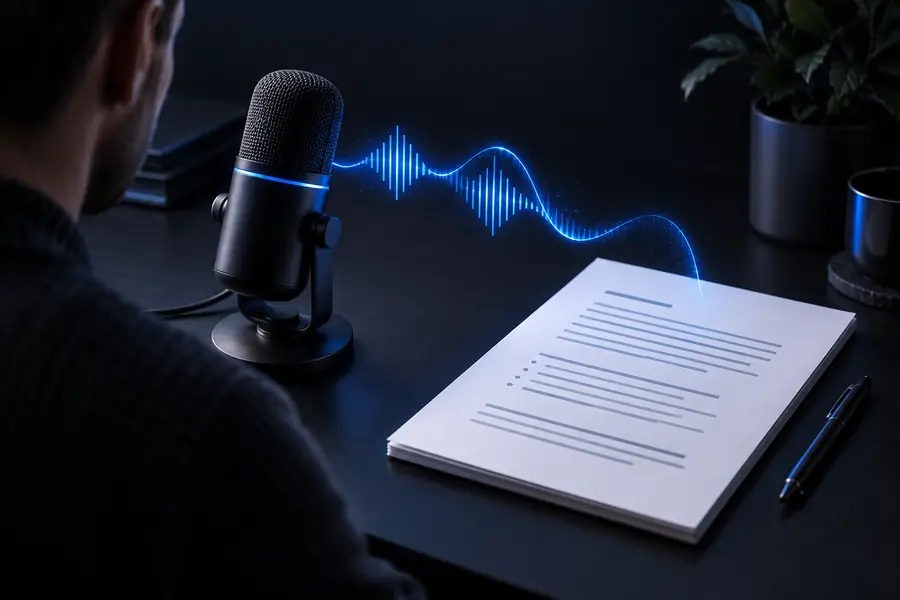
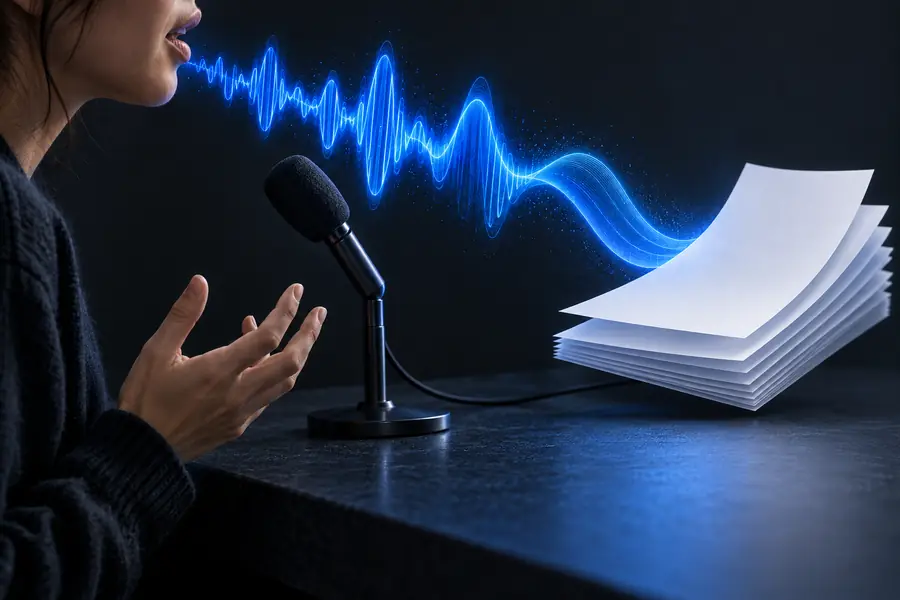
Illustrative before-and-after: a draft makes spoken words readable and searchable, but it still needs checking against the source.
These terms are related, but they answer different questions: what happened to the recording, and what document came out of that work?
To transcribe
The action of putting heard words into writing
A transcript
The written record produced by that action
To transcribe
Verb
A transcript
Noun
To transcribe
Speech or another audible source
A transcript
Words already written from that source
To transcribe
Listen, identify words and record them
A transcript
Read, search, edit or quote the recorded words
To transcribe
Manual listening or an automated draft with review
A transcript
Verbatim text or a cleaned-up, labelled document
To transcribe
Compare uncertain words with the sound
A transcript
Check that the document accurately represents the sound
People transcribe when they need spoken material in a form they can revisit, search or share. The right level of detail depends on what the text will be used for.
An interview contains a quotation that must be checked against the recording.
A written draft helps locate the passage; the journalist still verifies the exact words before publication.
how to use transcribe audioA recorded lecture covers concepts too quickly to capture in handwritten notes.
Text makes it easier to revisit terminology while studying, provided unclear passages are checked.
transcribe online freeA meeting recording contains decisions that participants want to review.
A transcript helps find the discussion, although action items still need to be confirmed separately.
transcribe workA spoken video needs a text draft for editing or reference.
The creator can review the dialogue in writing and correct names before using it elsewhere.
transcribe video to textIf you have a recording, try making a written draft, then listen back and correct anything uncertain. That final check is what makes the text more useful as a record.
To transcribe is to put spoken words or other audible material into written form. For example, writing down what someone says in an interview is transcribing that interview.
No. Transcribing records what was said in writing, usually in the same language. Translating expresses the meaning in another language; a recording can be transcribed first and translated afterward.
Not always. A verbatim version preserves fillers and repetitions, while a cleaned-up version may remove them to improve readability. The choice should be clear to anyone relying on the text.
Software can produce a draft, but it may mishear names, overlap or noisy speech. Human review matters most when the precise wording will be quoted, published or used to make decisions.
The written result is a transcript. Transcribe is the verb for making it, while transcription can refer to the process or the resulting text.